


Are Tourists "Ruining" Kyoto? I Read What Kyoto Locals Actually Say.
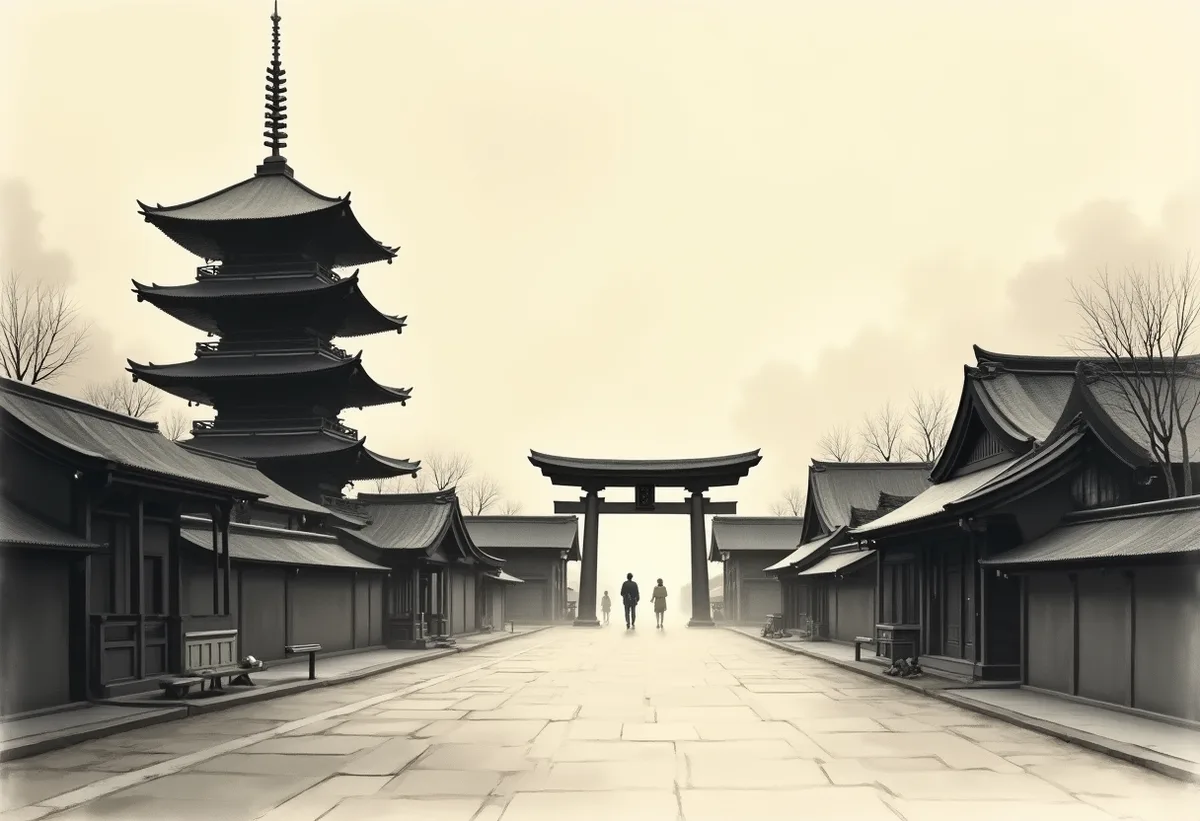
The honne behind overtourism — more generous, and more demanding, than your timeline thinks.
If you’ve read almost any English coverage of Kyoto in the last two years, you already know the verdict: tourists are ruining Kyoto. “Kyoto is not a theme park.” “A victim of its own success.” The headlines write themselves.
I live a Shinkansen ride away, and I read the Japanese version of this story — the one the headlines are paraphrasing without quoting. The honne is not the headline.
Let me translate.
First, the numbers: how full is Kyoto, really?
Kyoto isn’t imagining the crowds. Japan took in a record 42.68 million inbound visitors in 2025 — the first year ever above 40 million — who spent roughly ¥9.5 trillion (¥9.46 trillion, to be exact). Measured against Japan’s export categories, that spending now ranks second only to automobiles as a foreign-currency earner. For 2026, the travel agency JTB actually forecasts a slight dip — to around 41.4 million, down about 3% — driven by a slowdown in the China market.
So the backdrop isn’t “endless growth.” It’s a city that got very full, very fast — and now has to decide what it wants.
The voice you don’t hear in English
Here’s a quote from someone who lives it daily — a woman in her 70s running a souvenir shop near Kiyomizu-dera, one of Kyoto’s most overrun spots:
「コロナ禍と比べたら全然違います。観光客の方がようさん買ってくれはって、問屋さんも製造が追いつかないみたいで、うれしい限りです」 “Compared to the pandemic, it’s a completely different world. The tourists buy so much that our wholesalers can’t even keep up with production — I couldn’t be happier.” — shopkeeper in her 70s near Kiyomizu-dera, via Shueisha Online (May 2, 2025), transl. Ren
The article it comes from is literally headlined with two local lines: that foreign visitors might have better manners than Japanese ones — and “if these people didn’t come, we’d go under; I’m grateful.”
That voice — relief, gratitude, livelihood — almost never makes it into English coverage. It doesn’t trend.
And the voice that is a scream
But “the locals are fine, actually” would be its own lie. Right next to the gratitude is exhaustion, and sometimes something sharper. In a social-media post quoted by the same article, the head priest of Kōrin-in — a sub-temple of Kōdai-ji, in eastern Kyoto — put it about as bluntly as a Buddhist priest can:
「申し訳ありませんが、共存は無理だと思います。これ以上京都、日本が食い荒らされれば、日本が日本ではなくなります」 “I’m sorry, but I think coexistence is impossible. If Kyoto — if Japan — keeps getting devoured like this, then Japan stops being Japan.” — head priest of Kōrin-in temple, Kyoto, from a social-media post quoted by Shueisha Online, transl. Ren
Read those two quotes back to back. “I couldn’t be happier.” “Coexistence is impossible.” Same city. Same year. Both true.
What the English internet gets wrong about Kyoto
Here’s the thing it gets wrong — not the facts, the frame.
The dominant English take is a single emotion: tourists are the problem, Kyoto is the victim. Clean villain, clean victim. Even in Japan, some voices push back on that — Ryo Nishikawa, a tourism-studies scholar at Rikkyo University, has argued that the discourse around overtourism has tilted too far toward a “victim perspective,” and that the conversation got lopsided. (His point is about Japan’s overtourism debate broadly, not Kyoto alone.)
But the actual honne on the ground isn’t one emotion. It’s two, held at once, often by the same neighborhood: please keep coming, we need you and please be careful, you’re standing on something fragile. The English version flattens that into a hashtag. Kyoto is living in the contradiction.
Ren’s take
(That was reporting. This is my opinion, not a fact.)
So here’s where I land. I don’t think Kyoto wants fewer of you. I think it wants a different kind of you. The shop owner and the priest aren’t on opposite sides of an argument — they’re describing the same deal from two ends: the city will give you something rare, and in return it’s quietly asking you not to treat it like a theme park. That’s my read. Whether you honor it is the whole ballgame.
How to actually visit (like a guest, not a headline)
Not a lecture — just what works, from someone who lives here. (And yes — half the spots you’ve wanted to see since an anime framed them are on the overrun list. That’s exactly why timing is the whole game.)
- Go early. Kiyomizu-dera opens at 6am, and before 8am — at Kiyomizu and at Arashiyama’s bamboo grove — you’re basically alone. The crush is a midday phenomenon (roughly 10am–4pm); evenings and seasonal night illuminations thin out too. If you’re only in town a day, an early sunrise slot is the single best money-for-sanity trade there is.
- Spread out. For every famous temple there’s a quieter one a few stops away that locals actually prefer — walk north past Arashiyama’s busy stretch and you hit near-empty places like Gio-ji.
- Stay a night, not an afternoon. Day-trippers create the peak crush; people who sleep in Kyoto move at the city’s rhythm — early mornings, late evenings, the hours the crowds don’t own.
Travel like you’ve read this far, and you’re already on the city’s side of the deal.
Why it matters
“Tourists are ruining Kyoto” is the kind of sentence that feels true and translates badly. The locals’ real position is more generous than the timeline — and more demanding. Both halves are the honne.
Receipts below, as always. What should I decode next?
— Ren, in Tokyo
Sources
- 2025 訪日客数 4,268万3,600人・消費額 9兆4,559億円(過去最高) — 観光庁長官会見(2026-01-21) 訪日ラボ
- 2025 訪日客4,270万人・過去最高 — トラベルボイス
- インバウンド消費=自動車に次ぐ第2位の輸出規模 — 訪日ラボ
- 2026予測 4,140万人(▲約3%・中国減速) — JTB 2026年旅行動向見通し
- 京都・地元の声(歓迎/限界の両方)+記事見出し「日本人よりマナーいいかも」「この人ら来てくれんと、つぶれるし、ありがたい」 — 集英社オンライン(2025-05-02)
- オーバーツーリズム議論の"被害者視点偏重"への指摘(西川亮・立教大観光学部 准教授) — デイリー新潮(2025-05-27)
- 英語圏の"被害者フレーム"例("Kyoto is not a theme park") — Euronews
- 混雑回避(清水寺6am開門・〜8am推奨・10-16時最混雑) — Motenas Japan